
JsonifyWP
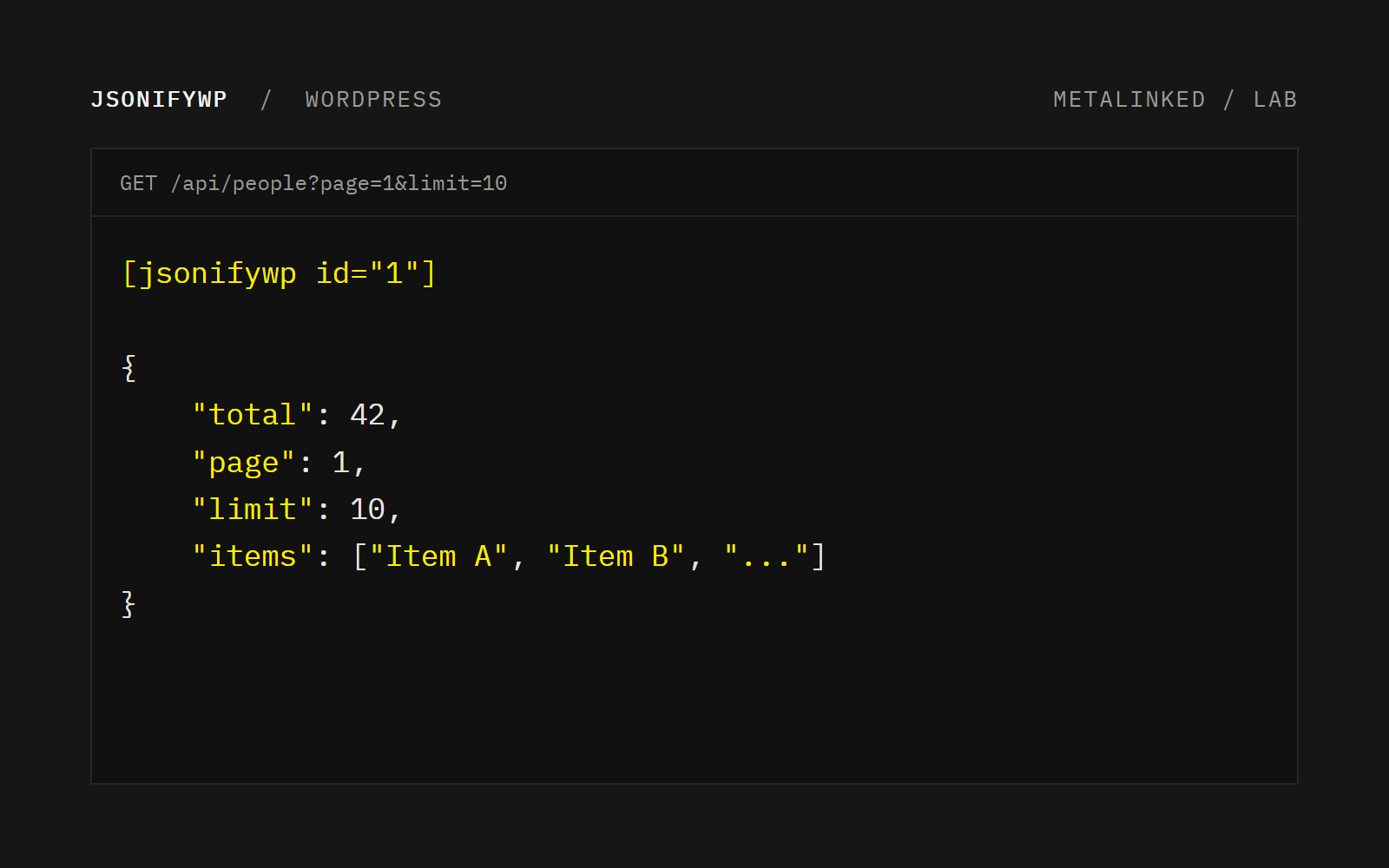
JsonifyWP is a WordPress plugin that lets you consume and display data from external JSON APIs using your own templates. It works with any service that exposes data as JSON: external databases, other content management systems, catalogues...
What does JsonifyWP do?
With JsonifyWP you can create custom endpoints from the WordPress admin panel, each with:
- Title and reference language
- Base domain and JSON API URL
- Customizable templates for lists and detail views
- Options to link each item to a detail page
- Automatic pagination settings for long lists
- Configurable cache duration to reduce calls to the external API
Presentation flexibility
For each endpoint you can choose which template renders the list and, if needed, the detail view. Templates are plain PHP files, easily extended with your own code:
- List templates located in
templates/list/ - Detail templates located in
templates/detail/ - Any new template automatically appears in the endpoint editor's dropdown
- Each list item can link to a detail page with expanded data
Shortcodes
JsonifyWP uses shortcodes to display data on any page or post:
[jsonifywp id="1"]– displays the list for the specified endpoint[jsonifywp-1]– shorthand form of the shortcode above[jsonifywp_detail]– displays the detail view based on URL parameters
The plugin makes the requests to the corresponding APIs and handles connection and format errors.
Two operation modes
Detail mode: each list item links to a detail page that shows expanded information fetched from a second API call.
List-only mode: the endpoint shows a list with automatic pagination controlled by the API (page and limit parameters), meant for posts, news or data without a detail page.
Other options
- Endpoint duplication: clone existing configurations to create new endpoints in one click
- API caching: temporarily stores API responses using WordPress transients, configurable in minutes (or disabled entirely)
- Automatic pagination: the plugin handles the
pageandlimitparameters without extra code - Flexible configuration: define which JSON field holds each item's detail URL; relative URLs get the API domain prepended
- Field labels: rename how each JSON field is shown in the generic templates, without touching code
- Multilingual support: includes Catalan and Spanish translations
JsonifyWP stores its entire configuration in a dedicated database table (wp_jsonifywp) and supports multiple independent endpoints, each with its own behaviour, templates, and data structure.
Have an idea or want to collaborate?
Have an idea, want to team up on a project, or just want to talk tech? Drop us a line. We love meeting people who want to build things.
Let's talk